


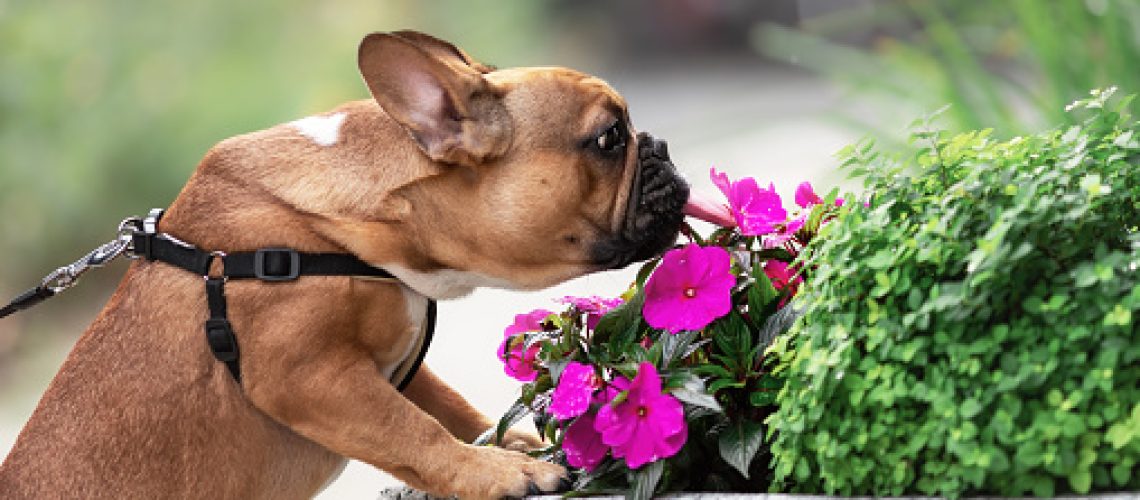
Let your dog use their nose freely—following scent trails, pausing to investigate, and making choices based on what they smell. This kind of sniffing supports emotional regulation by helping dogs gather context about their environment and release tension, which can translate into calmer, more resilient behavior at home and on walks.
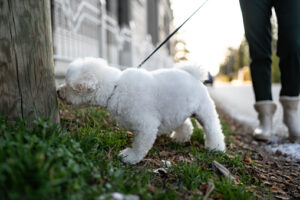 What’s the proof?
The science is compelling: dogs have roughly 300 million olfactory receptors, compared to about 6 million in humans, and a larger portion of their brain is dedicated to interpreting scent. That means sniffing isn’t “just smelling”—it’s high-value information processing and powerful mental stimulation that can reduce stress and improve focus over time.
Benefits of sniffing
- Stress relief — Sniffing can help lower arousal and support a calmer emotional state.
- Mental enrichment — Scent work engages the brain and helps prevent boredom-driven behaviours.
- Natural behaviour — Smelling and tracking are instinctive needs, not optional extras.
- Environmental information gathering — Dogs learn who has been there, what happened, and how recently, through scent.
- Anxiety reduction — Predictable sniff time can provide a soothing routine and coping outlet.
- Confidence building — Choosing where to go and what to investigate supports agency and bravery in new places.
|
 Key insight: A focused sniff session can be as tiring as physical exercise because your dog is doing intense information-processing work. If your dog seems “worn out” after a sniffy walk, that’s a good sign.
Signs your dog needs some sniff time
- Restlessness on walks — Your dog may pull, zig-zag, or seem unable to settle into a rhythm because they’re craving more time to investigate scents.
- Excessive energy at home — When mental needs aren’t met, dogs often look “hyper” even after physical activity.
- Anxiety or heightened reactivity — A dog who feels overwhelmed may bark, lunge, or startle easily, especially in busy environments.
- Destructive or nuisance behaviors — Chewing, digging, or constant attention-seeking can be a sign of unmet enrichment needs.
- Difficulty focusing — If cues fall apart outdoors, your dog may be over-aroused and need to calm before training can stick.
Ways to add in sniff time
Activity | Description | Benefits |
Sniff walk | A slow, dog-led outing where sniffing is the main goal, not distance. | Stress relief, emotional regulation, confidence |
Scent games | Hide treats or toys around a room/yard and let your dog search. | Mental stimulation, focus, boredom prevention |
Nose work | Structured scent-detection activities (classes or DIY) using specific target odours. | Confidence, problem-solving, handler-dog teamwork |
Snuffle mat | Scatter kibble or treats into fabric strips so your dog forages with their nose. | Calming enrichment, slower eating, indoor decompression |
Outdoor exploration | Low-pressure time in a safe area (long line if needed) to investigate natural scents. | Natural behavior outlet, anxiety reduction, resilience |
“Find it” on walks | Toss a treat into grass or leaf litter and cue your dog to search. | Redirects arousal, builds optimism, reinforces sniffing |
Creating the perfect sniff walk 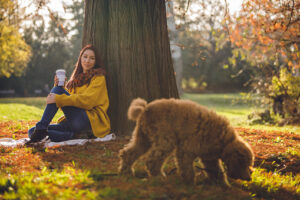
- Start by committing to a dog-led pace. Instead of aiming for a certain distance, let your dog choose where to pause, which scent trails to follow, and when to move on—within safe boundaries. This sense of control is a big part of what makes sniffy walks effective.
- Next, seek out varied environments when you can: different neighborhoods, parks, quiet trails, or even a new block can provide fresh scent “news.” Build in extra time so your dog can sniff thoroughly.
- Don’t rush it. If you’re short on time, choose a smaller area and go slower rather than trying to cover more ground quickly. A short, sniff-rich walk often supports better behavior than a longer walk where your dog is constantly redirected.
|
 Pro tip: Try the 80/20 rule—aim for about 80% sniffing and 20% walking with purpose. You can still practice loose-leash skills, but let sniffing be the main event.
Summary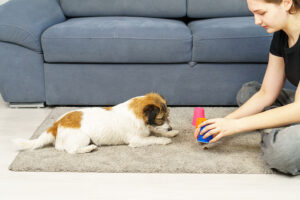
Olfactory decompression isn’t a luxury—it’s a core part of how dogs stay balanced, confident, and emotionally regulated. By making space for sniffing, you’re not “spoiling” your dog, or letting them dominate you. You’re meeting a fundamental need for mental stimulation and stress relief, making for a happier life together.
Shop our meals here
Cover Image by Irina Nedikova